Field note · 01
Is AI a lot like agriculture?
Agriculture is probably the oldest job we humans have, and there is something strange about it that I had never really thought about until recently.
We can spend a lifetime becoming exceptionally good at growing wheat without ever constructing a single grain of wheat.
We choose the seed, read the soil, understand the season, and control water, nutrients, and pests. But we do not place the roots. We do not attach the leaves. We do not run photosynthesis or manage the thousands of chemical reactions happening inside the plant every second.
We control the conditions, and nature underneath does the building.
The more I work with AI, the more familiar that division of labour feels.
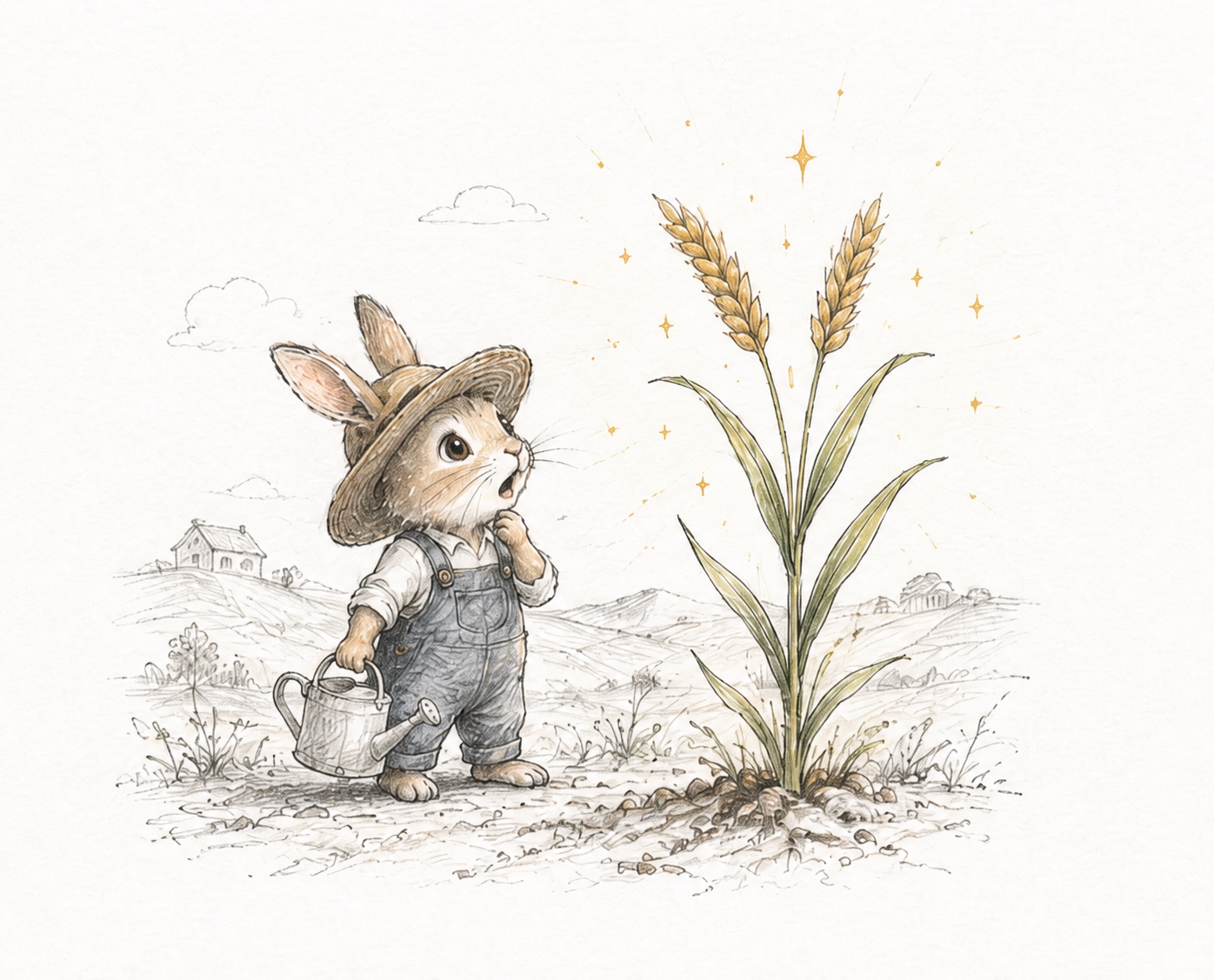
If you really think about farming, isn't it a little like magic?
We are so used to agriculture that we almost forget how strange it is.
You put a seed in the ground, give it water and the right conditions, and months later… there is a living thing producing food. It pulls matter straight out of air and water, uses sunlight as energy, and turns it into something we can eat.
That is the part I find almost magical about farming: something that is so natural to Earth can feel so unnatural and impossible if you really think about it.
As farmers, we work one level above the machinery that actually builds the plant. We shape the conditions; the machinery underneath does the growing.
When I use AI, I am also working one level above the machinery. I give it a goal, some context, and a set of constraints, and something enormously complicated happens underneath.
That is where the farming analogy starts to become interesting.
The gardening analogy has been made before. Chris Olah has described neural networks as things we grow rather than program: we design the architecture and training objective, but the internal machinery that emerges is learned rather than written by hand. Dan Shipper has similarly compared AI-assisted work to gardening rather than sculpting: instead of directly shaping every detail, we increasingly set the conditions in which an output can emerge. But I think the analogy goes further than that. Agriculture may be a useful model not just for how AI grows, but for what human work around AI is becoming.
The model is the field
So if working with AI is similar to agriculture, what is a large language model, a small language model, or any intelligence model in this analogy?
I think the model is the field.
A field is not the thing that grows. It is a bounded space of cultivated potential. Long before a seed is planted, the soil already contains nutrients, structure, water, and millions of living processes that make growth possible.
Even before I write a prompt, the model already contains an enormous landscape of capabilities. With a prompt, I am planting something specific into that landscape and giving a particular part of its potential a reason to emerge.
The same field can grow many different plants. What appears depends on the seed, the conditions around it, and how it is cultivated.
That is a model: an enormous field of latent ability that can remain completely inert until something is planted in it.
The agent is the plant
The closest equivalent is probably the system that begins running once the model is given a goal.
An agent.
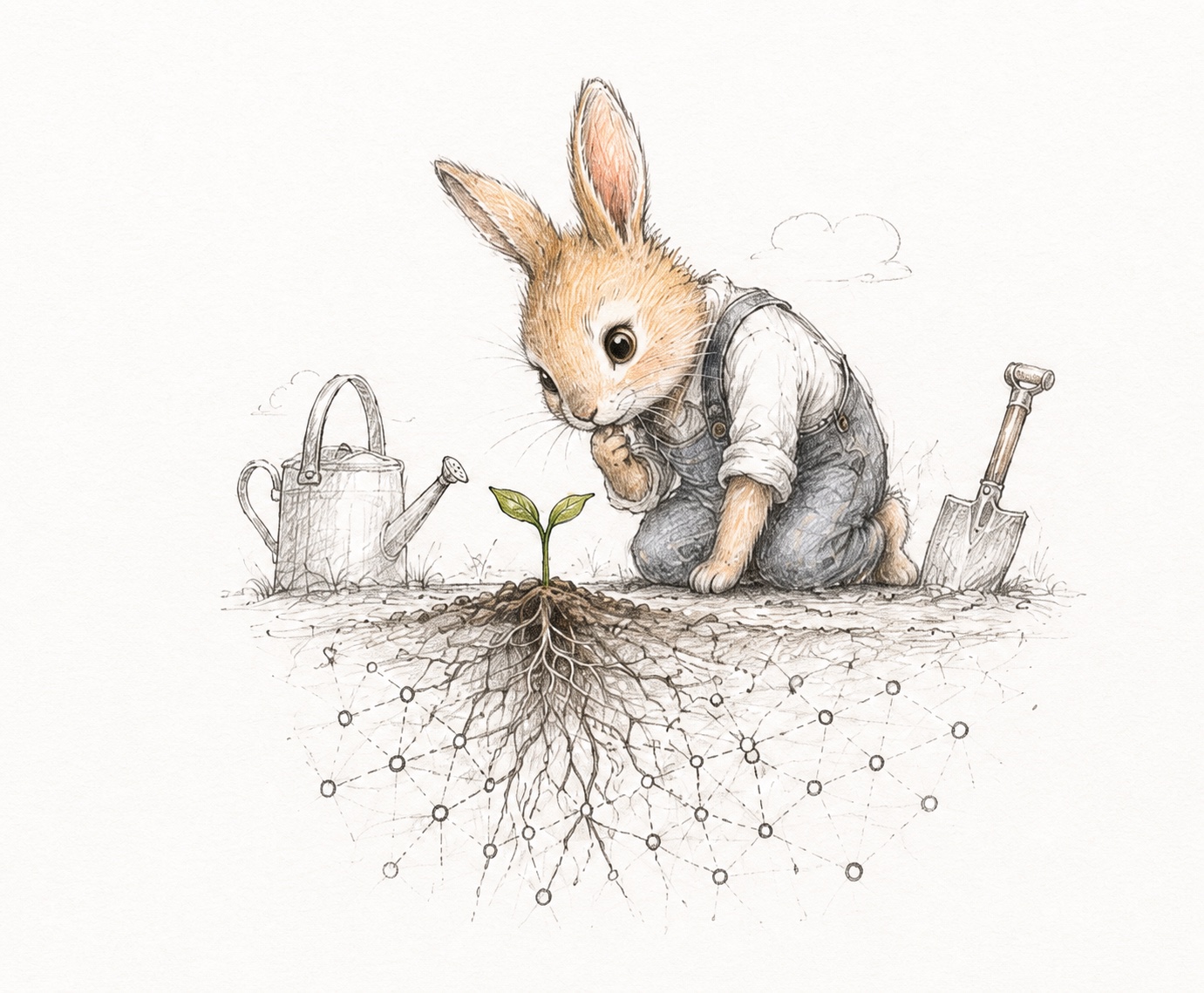
An agentic system is not alive. But I think that, inside the digital world, it is the closest thing we have to growth. We give it a starting instruction and a set of conditions, and then it goes off on its own. It branches. It makes choices we did not specify. It uses tools. It encounters obstacles. Sometimes it recovers. Sometimes it goes confidently in the wrong direction. It works while you sleep, and sometimes it dies quietly at step 40 and you find the body in the morning.
The model is the growing capacity. The agent is the thing that grows. The output is the fruit.
And the same model can give rise to hundreds of very different agents and outcomes. What emerges depends on what you start with, the conditions you create around it, and how you guide it as it develops.
The tree is assembled out of the sky
A seed weighs almost nothing. A full-grown tree weighs several tons. Where did the mass come from?
Much of it is water, as with all living beings on Earth. But what about the dry mass?
Soil is the next answer. If trees were built out of soil, there would be a crater under every old tree on Earth.
A lot of the dry mass of a tree comes from carbon dioxide in the atmosphere. Through photosynthesis, the tree pulls carbon from the air and gradually turns it into wood, roots, branches, and leaves.
The tree is assembled out of the sky.
The seed is not the material. It is the organiser of the tree’s internal machinery of growth.
I think that is exactly what a prompt is. A prompt may be three sentences long and produce ten pages of analysis, a working piece of software, or an entire plan. Almost none of the material was contained in the prompt itself.
A prompt activates a much larger capability and gives it direction.
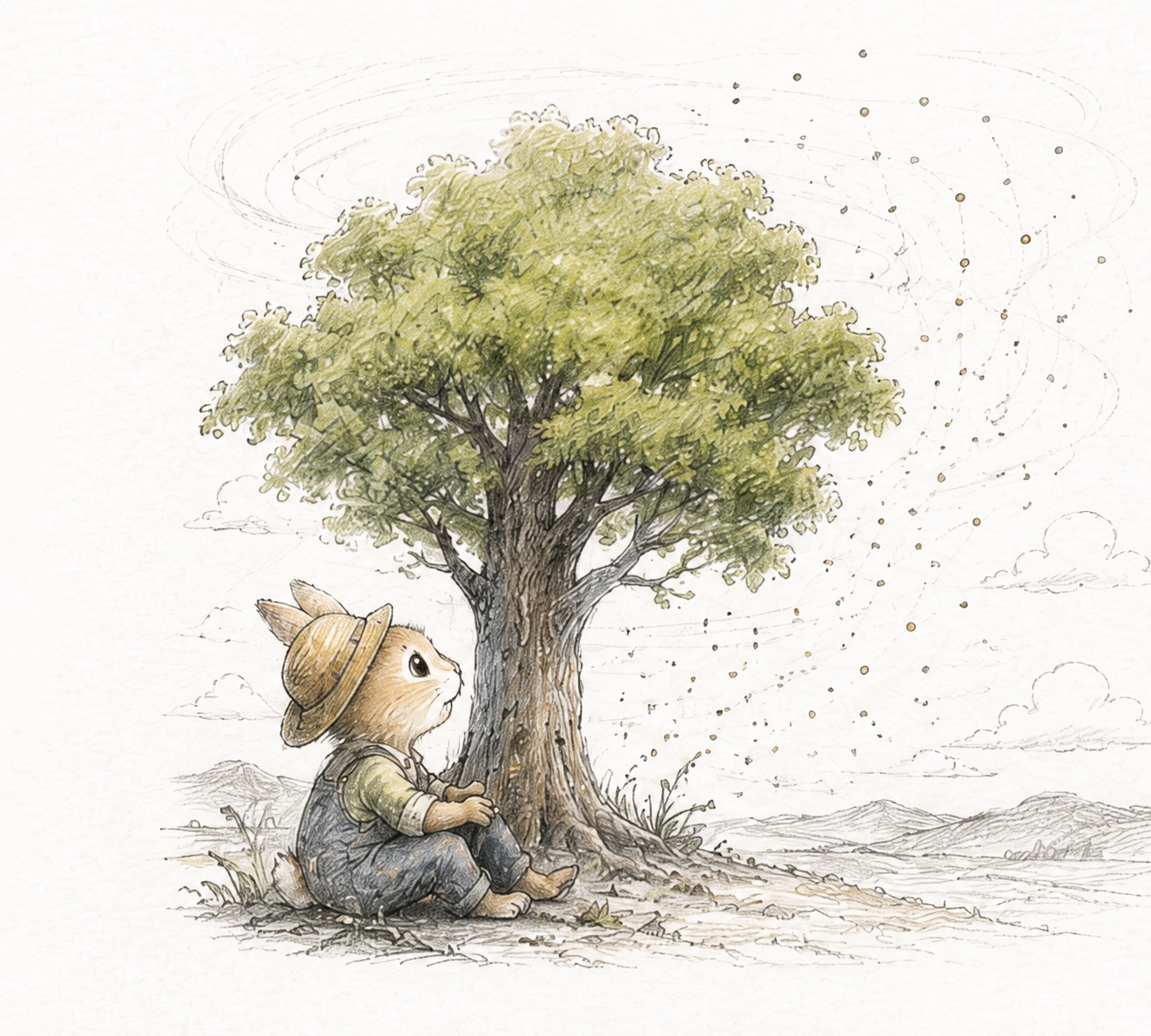
If plants grow on their own, why is farming the oldest profession?
Forests existed long before agriculture. Growth was never the thing humans added.
A forest produces an astonishing amount of biological material. But it will not conveniently give you wheat three hundred metres from your house, ripening within a predictable window, in a quantity that can feed a village.
That required cultivation.
Cultivation turned out to be an enormous body of knowledge.
Humans selected plants for characteristics they wanted. Wild cereals naturally scatter their seeds when they mature, which is excellent for the plant and terrible for harvesting. Over generations, people preferentially propagated plants whose seeds stayed attached long enough to collect.
We did not create the plant's ability to grow. We learned how to direct that ability toward something useful.
That distinction matters for humans working with AI.
There is a fear underneath a lot of discussion about generative AI that sounds something like this: If I did not write every word, draw every pixel, or type every line of code myself, what exactly did I contribute?
Agriculture gives a surprisingly old answer.
Nobody looks at a successful harvest and says the farmer had nothing to do with it because photosynthesis did most of the molecular work. The farmer's contribution exists at another level.
What should be grown? Where? Under what conditions? What should be removed? When should we intervene? Which plants should become next year's seed? When is something ready?
None of that is the biology itself, but it still decides the outcome.
I ran into this directly. I gave a coding agent the job of creating a new video-rendering pipeline, and it came back with something genuinely elegant. The solution was good, but it would also have required me to commit to owning and maintaining more expensive hardware.
So I threw it away and chose a less elegant solution that cost less to run.
The code was not wrong. It was not stunted, malformed, or confidently incorrect. It was good, and it did not belong on this farm.
Farmers make versions of this decision constantly. You plough under a healthy crop when its price falls below the cost of harvesting it. You do not plant the higher-yielding variety if it requires irrigation you do not have. The plant did nothing wrong. It was simply not worth growing here, this year, at that cost.
And notice what that decision required from me. Not the ability to write the rendering code, but a view on what I was willing to own.
AI may be pushing more human work toward that layer.
How do you farm something unpredictable?
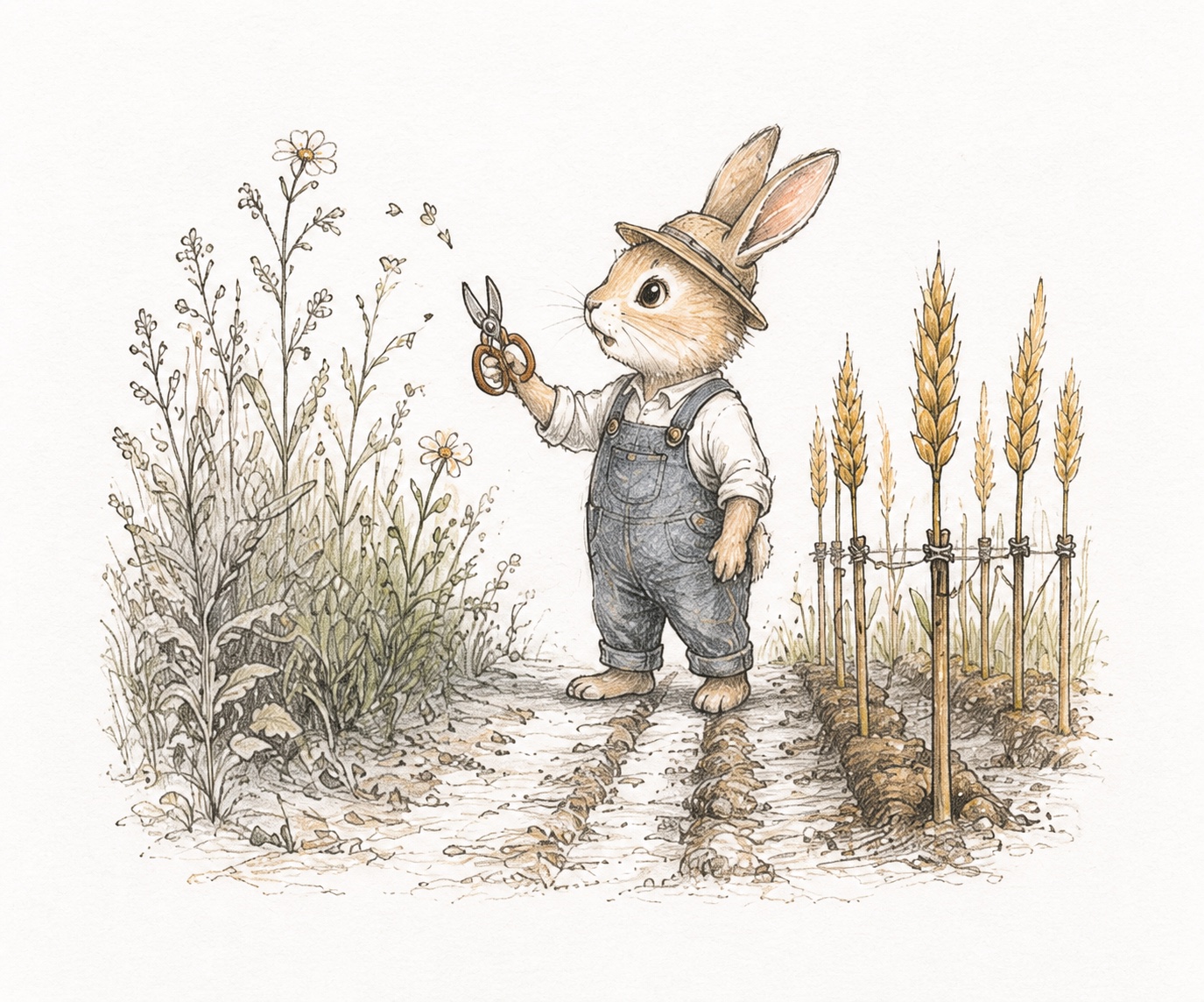
This was the part of the analogy that initially bothered me most. A farmer can plant wheat and be reasonably confident that wheat will appear.
A model does not behave like that. A model can receive the same prompt twice and produce two different answers.
How can you build anything reliable on top of something nondeterministic? But agriculture has exactly the same problem.
No two wheat plants are identical. They grow differently, yield different amounts, ripen at slightly different times, and some simply fail.
The farmer does not make every plant predictable. They create a system in which the variation becomes manageable.
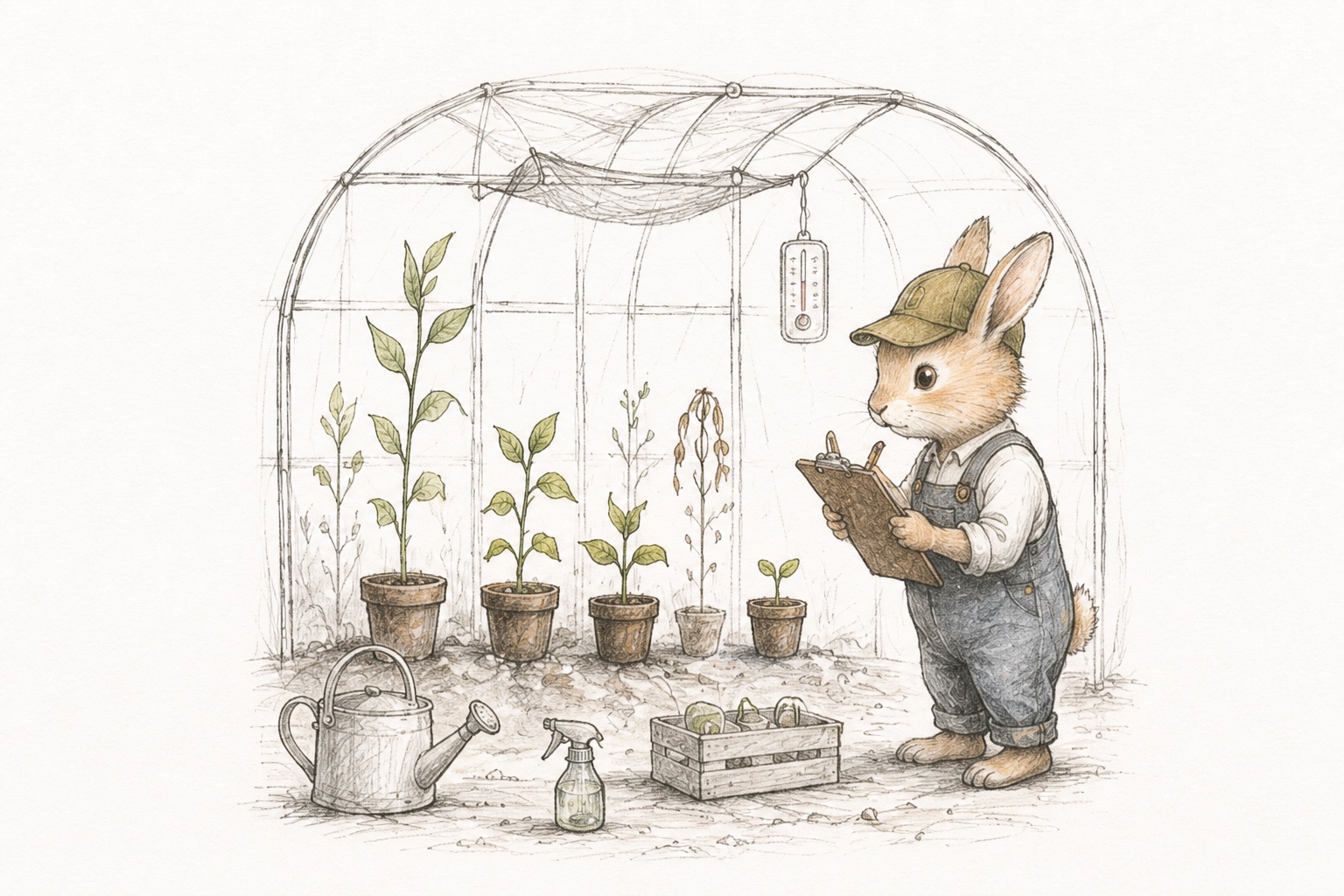
Irrigation reduces dependence on rainfall. Greenhouses control temperature. Fertiliser changes nutrient availability. Spacing affects competition. Pest control removes another source of variance.
The plant remains variable. The system around it makes the harvest plannable.
That is increasingly what an AI harness does. You give the model better context. Restrict the actions it can take. Give it tools. Check intermediate results. Retry failures. Compare multiple attempts. Evaluate the result against something external.
A farmer has roughly the same three moves against variance.
- They control the conditions so fewer things can go wrong: that is context and scaffolding.
- They plant a field rather than betting everything on one seed: that is retries and sampling.
- And they inspect the harvest and reject what does not meet the standard: that is evals.
None of these makes one plant perfectly predictable. Together, they make the harvest predictable enough.
Some failures do not look like failures
A crop can fail obviously. It can come up stunted, or not come up at all.
But there is a third kind of failure: it can look perfectly healthy and still contain something you cannot see. Grain can contain toxins that bypass visual inspection.
AI output has the same problem.
Sometimes it is malformed. Sometimes it fails completely. But other times it is fluent, convincing, and wrong.
That last failure is the dangerous one because surface quality tells you almost nothing about whether the underlying answer is correct.
You do not just inspect the answer more carefully. You test it against something outside itself: run the code, check the calculation, verify the source, compare it with a known answer. That is what evals are for.
Is intelligence invented or discovered?
I always assumed machine intelligence would have to be constructed in the same way we construct a watch.
Someone would eventually understand intelligence well enough to break it into its component parts: logic, memory, reasoning, perception, planning…
…write the rules and assemble them one by one.
But that is not really what happened. We built large learning systems, exposed them to enormous amounts of human-produced information, and optimized them. Then capabilities “emerged” that nobody had individually written down.
So the thing I actually suspect, loosely, is that intelligence might be more intrinsic to the universe than we assume.
Perhaps intelligence is simply one of the things sufficiently complex arrangements of matter can sometimes do.
Biology may be one route.
Computation may be another.
Humans did not invent the seed's ability to become a tree either. That ability was already in the world, doing its thing for a very long time before anyone noticed. What we invented was farming, the practice of cultivating something that is useful to us.
Perhaps something similar has happened with AI. We definitely invented the machinery. But we may also have discovered that the range of systems capable of intelligent behaviour is much larger than we thought.
Perhaps intelligence is not something the universe produced once. Perhaps it is something the universe always knew how to do.
And if that is even partly true, then the interesting question is no longer only how much smarter we can make the models.
It is how good we can become at cultivating what is already there.